Every festival has a merch table. Most of them are a pile of one-off giveaways, a thin tee in one corner, a foam trucker in the other, nothing that belongs together and nothing anyone would pay for.
Then there's the other kind of table: the one with a line. The difference isn't budget. It's that somebody treated the merch like a drop, a small, matching collection built to the same standard as the merch at a retail store, instead of a checkbox on the event plan.
Here's the playbook we use.
Start with the honest test
Before you pick products, ask one question: would anyone pay for this at the table?
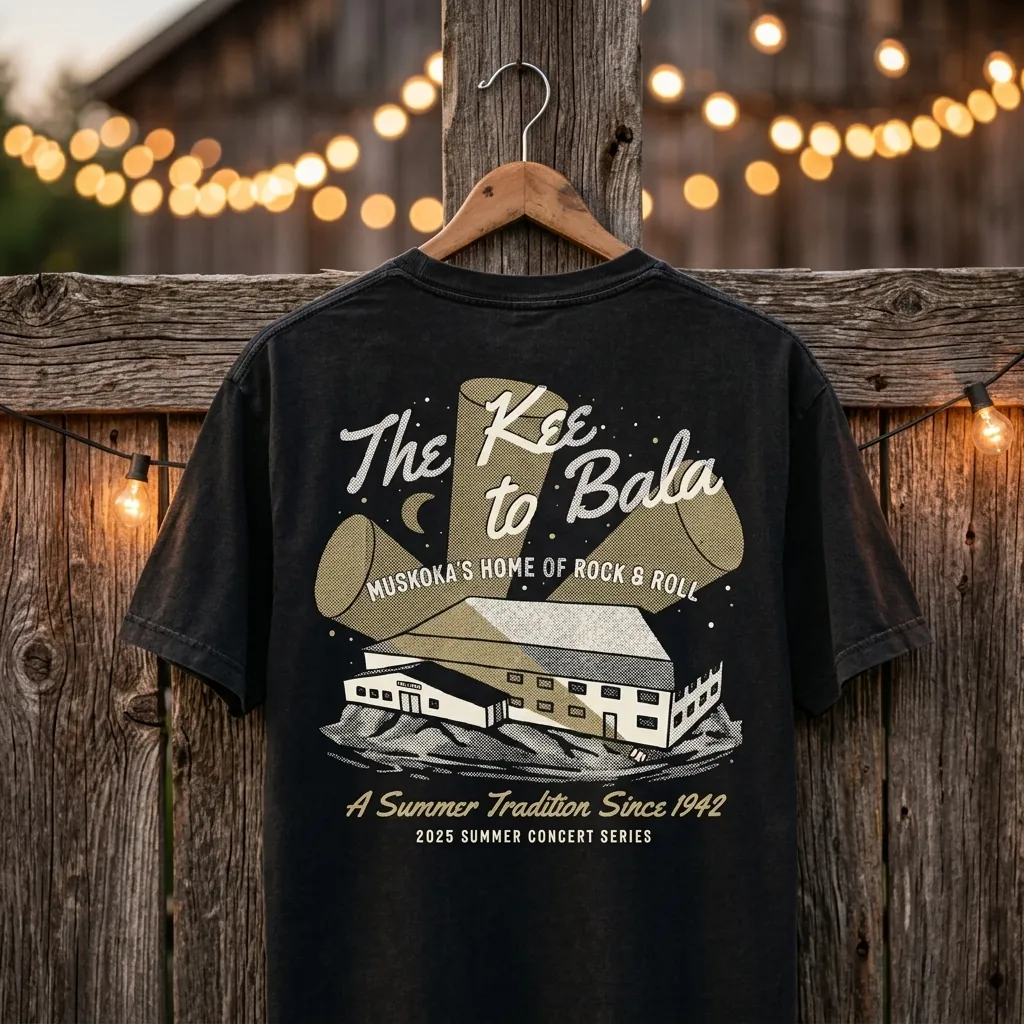
If the answer is no, the piece won't get worn after the weekend either, free or not. Everything below follows from that one filter. It rules out thin blanks, it rules out slapping the sponsor lockup dead-centre on everything, and it rules in the stuff people photograph: garment-dyed heavyweights, vintage-style graphics, hats with real embroidery.
The three-piece core
You don't need twelve SKUs. A drop that looks like a collection needs three:
- The tee, garment-dyed heavyweight, full-back print, front hit and sleeve. This is the volume piece.
- The hoodie, oversized heavyweight fleece carrying the matching back print. Evenings get cold; hoodies sell after sunset.
- The caps, structured snapbacks or rope caps with 3D embroidery, two or three colourways so people can pick. Headwear is the piece that keeps getting worn all year.
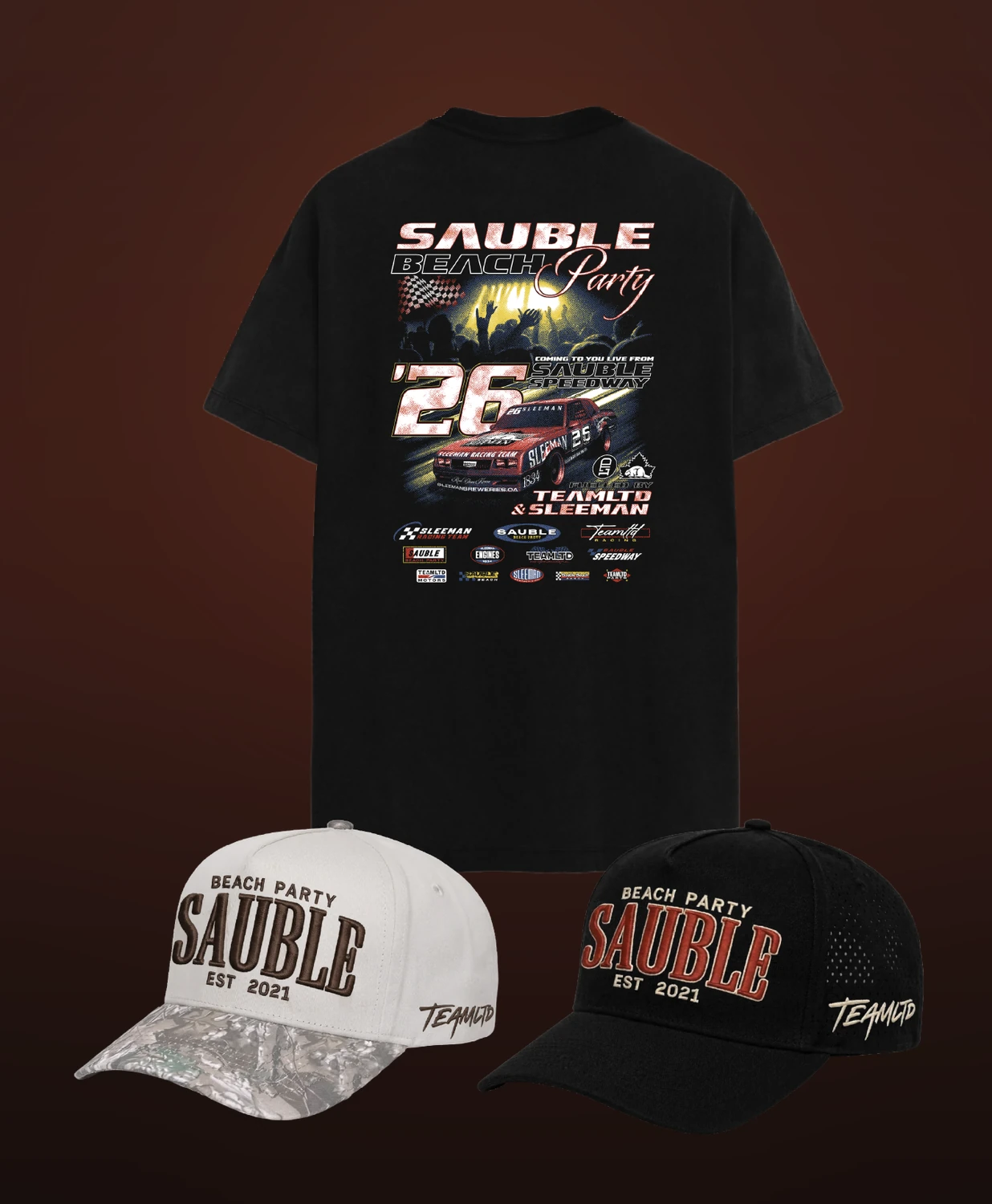
The thing that makes three pieces read as a drop is one graphic package. The Sauble Beach Party '26 drop above is a single vintage race-poster artwork system carried across every piece, the table looks like a collection, not a pile of one-offs. That's also what makes it photographable, and festival merch that gets photographed is free marketing with your event's name on it.
Size the run to the crowd
Festival merch goes wrong in the warehouse, not at the table. Order for the crowd you actually have, not the one you're hoping for, limited-run is a feature, not a compromise. Selling out on Sunday afternoon beats storing boxes until next season, and "we sold out" is the best merch marketing there is.
The math that makes this work: domestic runs start at 25 pieces per style, and fully-custom builds start at 50 per style. A 200-person event might run one tee, one hoodie and two hat colourways. A bigger festival scales the same structure up instead of adding more SKUs.
The timeline decides everything
Most festival merch disappointment is really a timeline problem, the brief landed three weeks out and the only option left was whatever could ship fast.
- Stock products with your artwork: 2–3 weeks from approved mockup.
- Fully-custom builds (like Workshop hats): 4–6 weeks by air.
- Best practice: brief 6–10 weeks before gates open. Tight date? Say so up front, rush lanes exist, but they narrow your options.
Sell it, gift it, or both
The same drop can work three ways: sold at the table, bundled into VIP and artist kits, or used as staff uniforms that double as walking signage. Co-branded sponsor pieces run through the exact same process. We can work with you or directly with your sponsor on their portion.
Selling out on Sunday afternoon beats storing boxes until next season.
The short version
- One honest test: would anyone pay for it at the table?
- Three pieces, tee, hoodie, caps, carrying one matching graphic package.
- Size the run to the real crowd; limited-run is a feature.
- Brief 6–10 weeks out. Stock runs 2–3 weeks; fully-custom 4–6.
- Sell it, gift it into VIP and staff kits, or both.
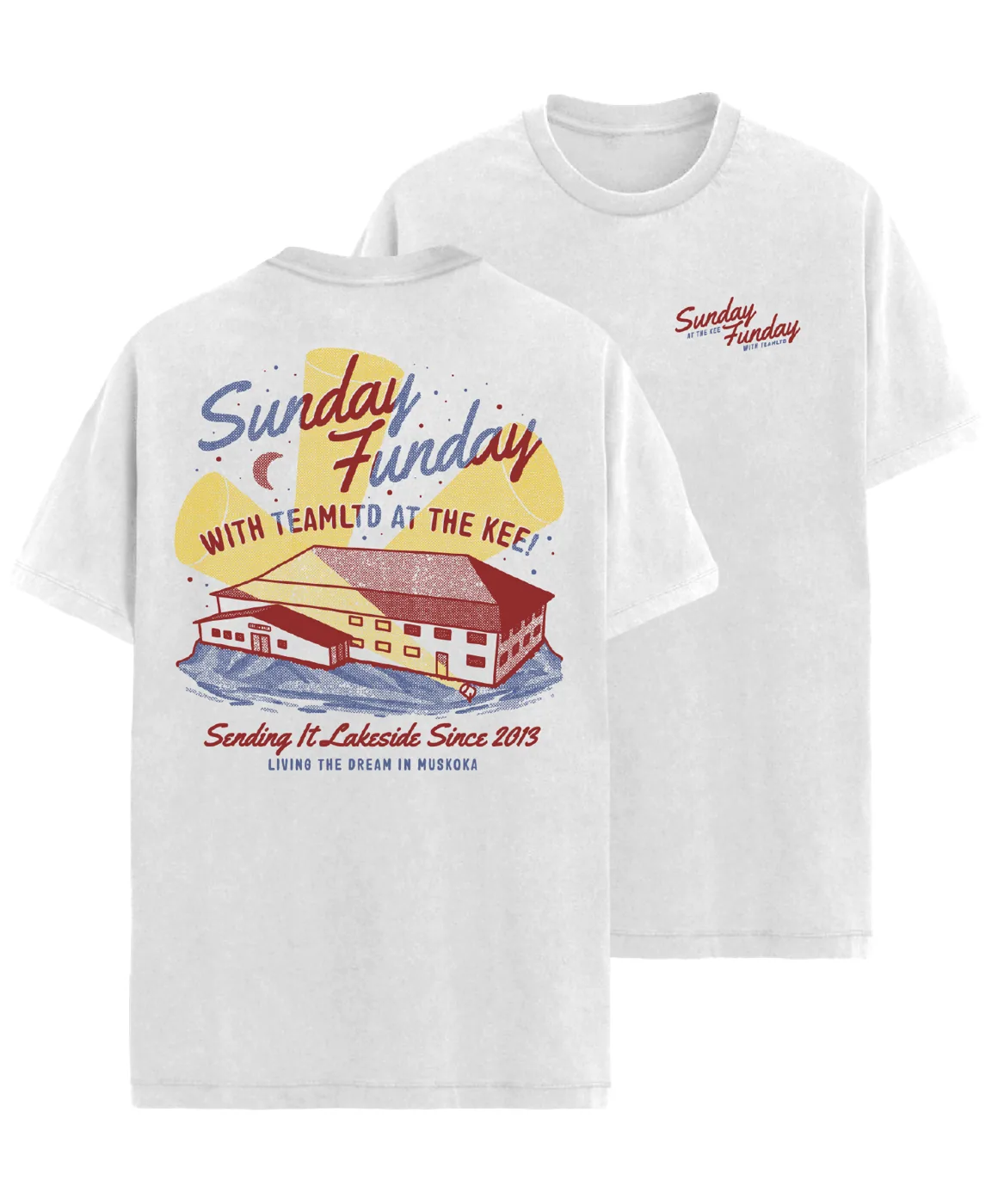
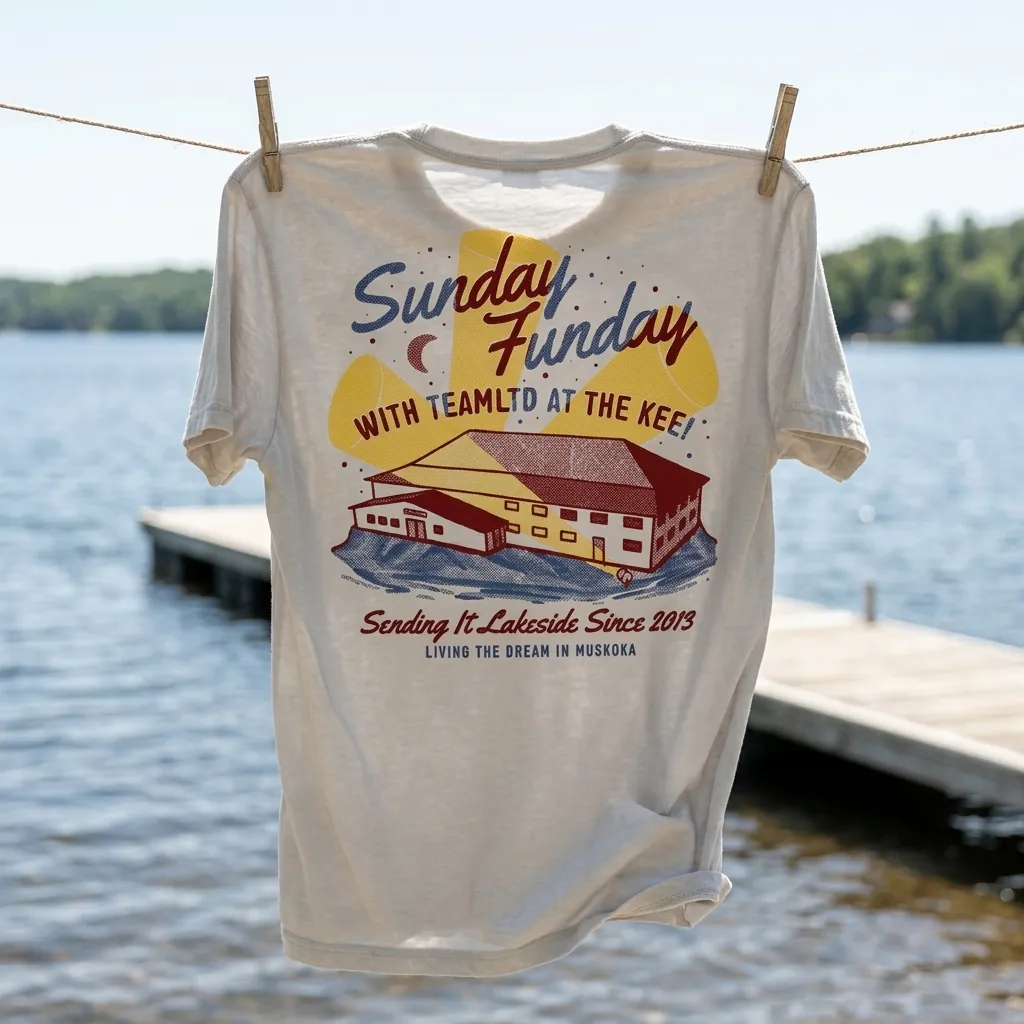
From the workshop: drops we've built
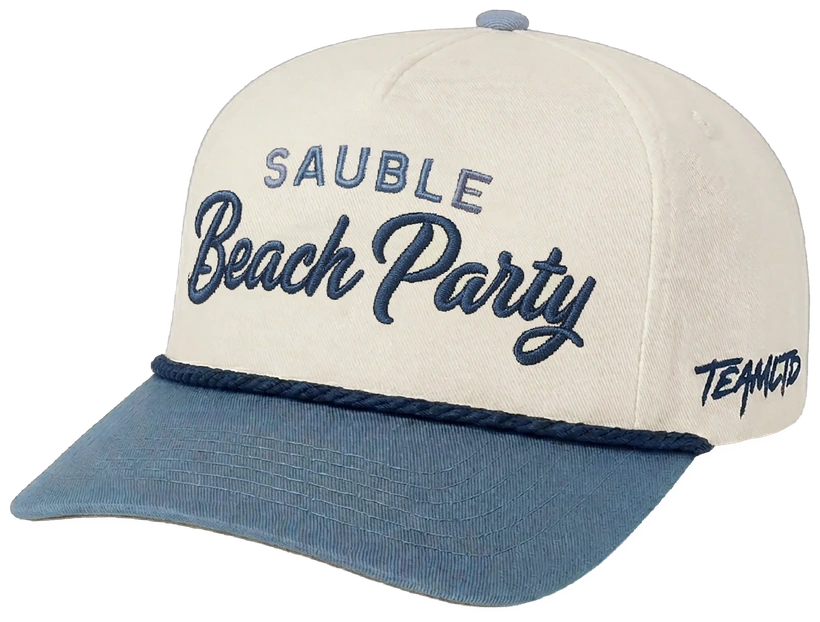
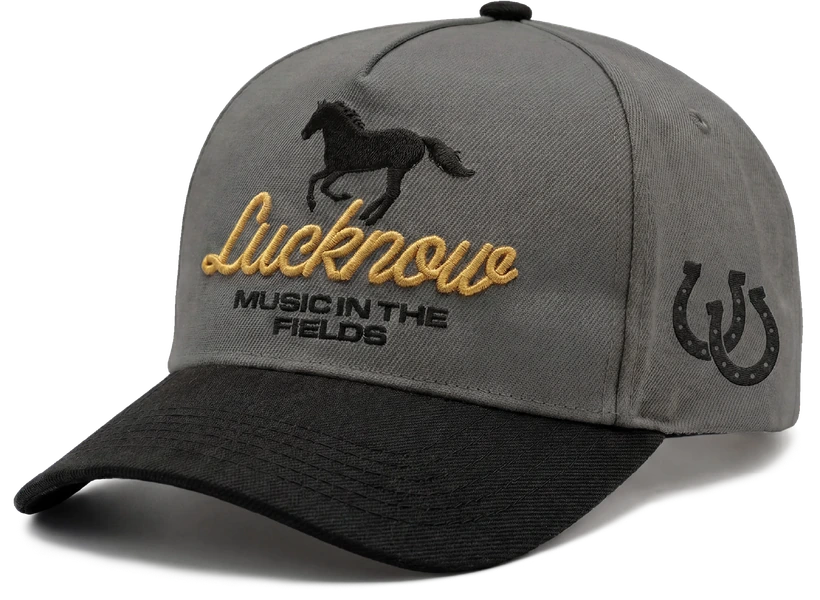
Beach parties, music festivals and lakeside venues out of our Mississauga, Ontario studio. There's more on the festival merch page and in our featured work.
Planning a drop for your next event?
We build festival and event merch for venues, beach parties, race weekends and festivals across Canada. Send the date and expected crowd. We'll come back within 48 hours with products and pricing. Not sure what to send us? Here's how to brief your custom merch order.
Start a project →